Find the hidden colours in a leaf
Free printable: leaf worksheet and record sheet
Two A4 pages: picture steps for leaf chromatography, learning outcomes, a leaf colour hunt table and a record sheet for your colour strip. No email needed.
Download the free PDFWhy do leaves change colour? The green goes away, and the yellow and orange that were hiding can finally show!
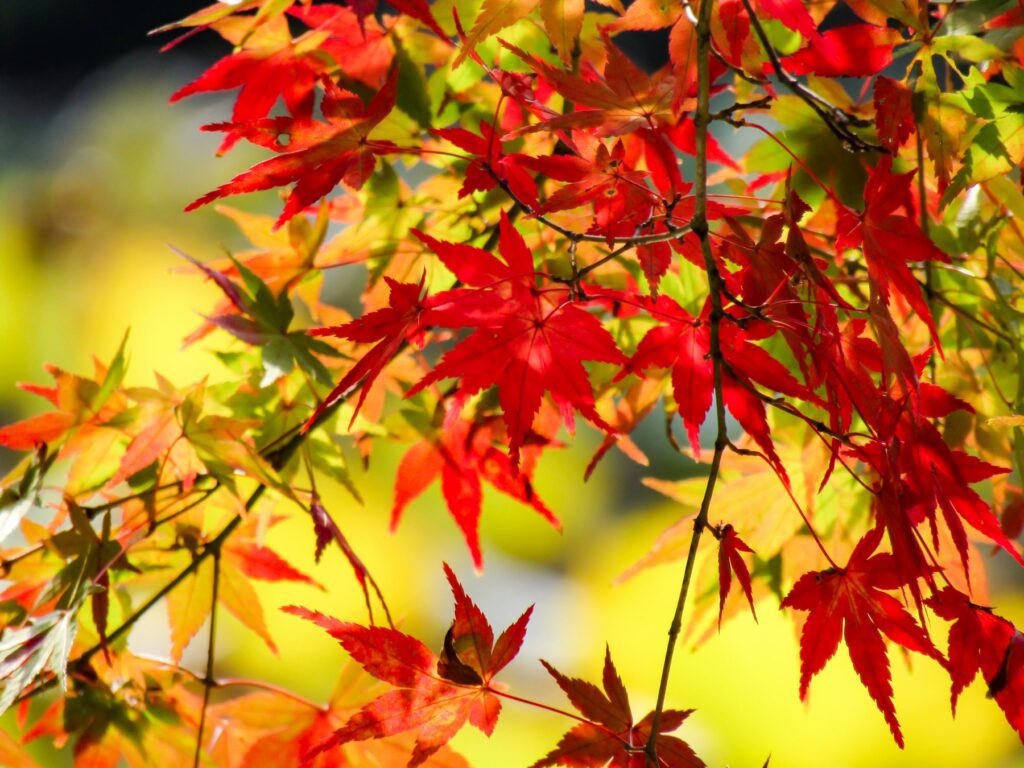
In summer, leaves are full of a green colour called chlorophyll. In autumn, the days get shorter and colder. The tree stops making chlorophyll. The green fades, and the yellow, orange and red colours appear.
Tap each card to see what the word means.
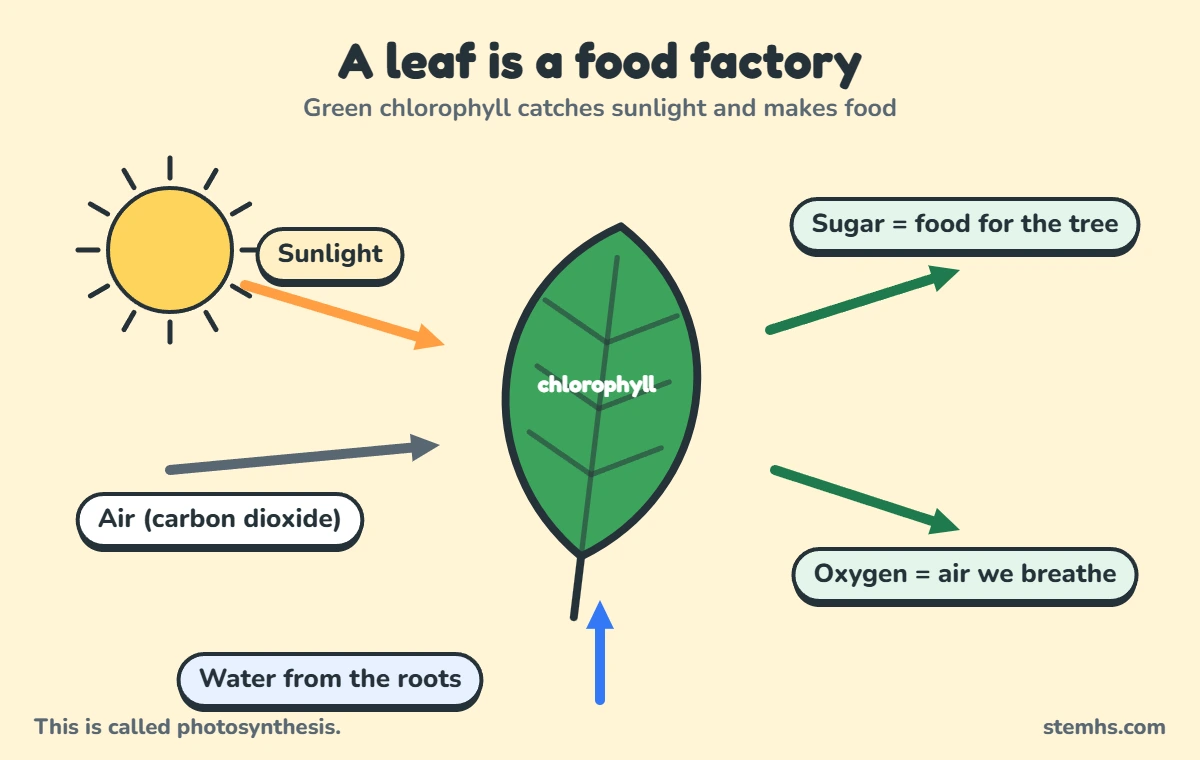
Leaves use sunlight, water and air to make sugar. Sugar is food for the tree. This is called photosynthesis. The green chlorophyll catches the sunlight.
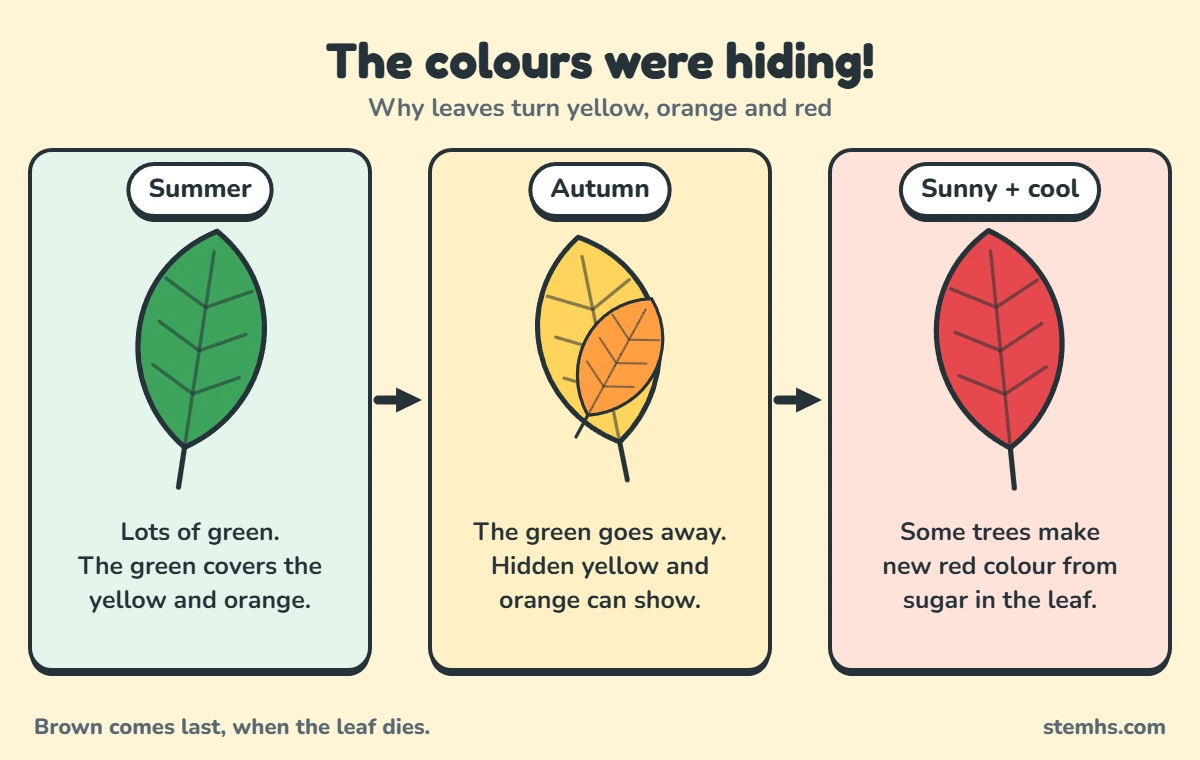
Yellow and orange are in the leaf all summer. We cannot see them, because there is so much green. In autumn the green breaks down. Now the yellow and orange can show.
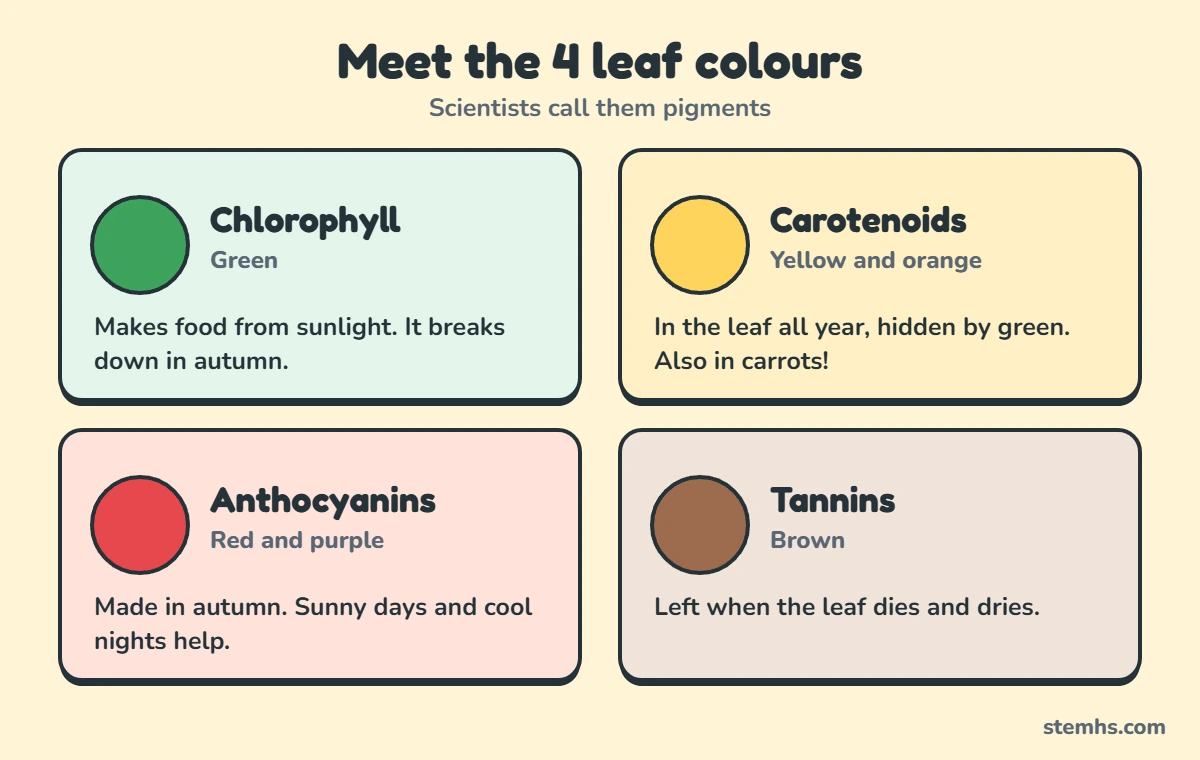
Scientists call these colours pigments. Every tree has its own mix. That is why one tree turns gold and the tree next to it turns red.
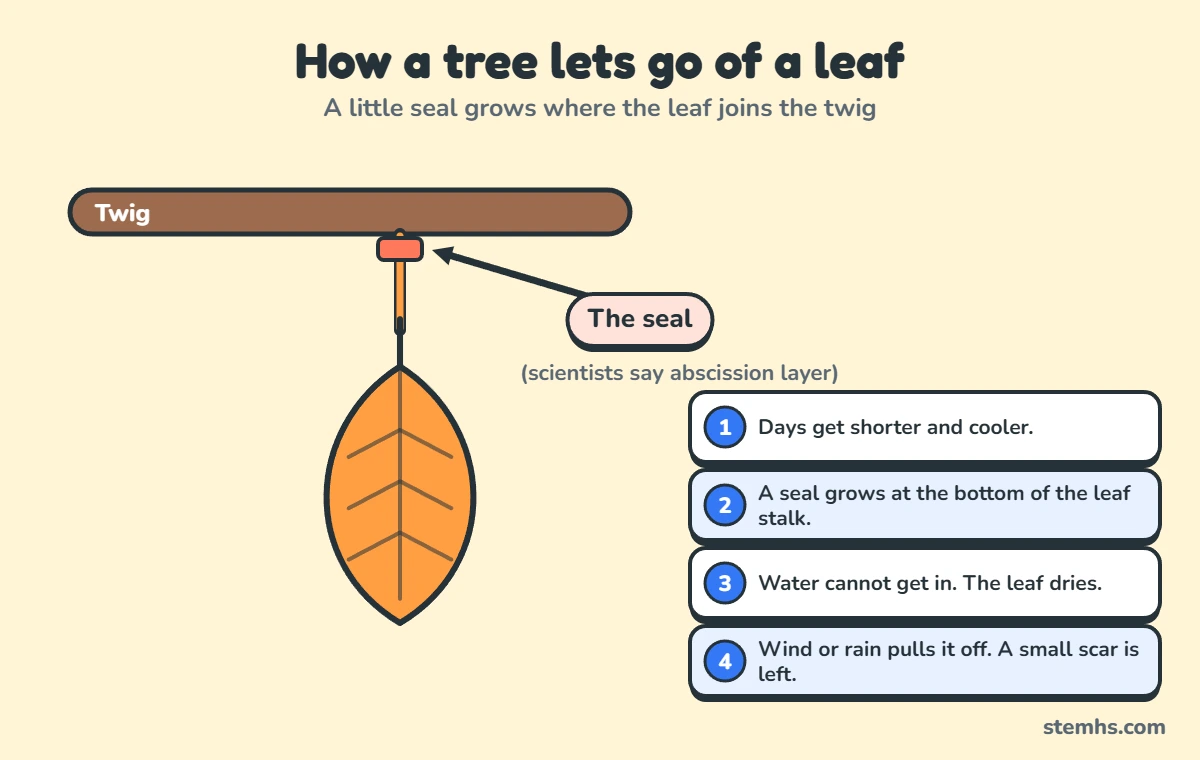
Winter is cold and dark. Soft leaves can freeze, and there is less sunlight to make food. So the tree gets ready:
- It takes the useful things (nutrients) back from the leaves. 🔙
- It grows a little seal where the leaf joins the twig. 🚪
- The leaf dries out and the wind blows it away. 🌬️
- In spring, the tree grows brand-new leaves. 🌱
Pine trees and holly are evergreen. 🌲
Their leaves are thin needles or thick and waxy. They do not freeze easily. So these trees can keep their leaves in winter. They still lose a few old leaves, just a little at a time.
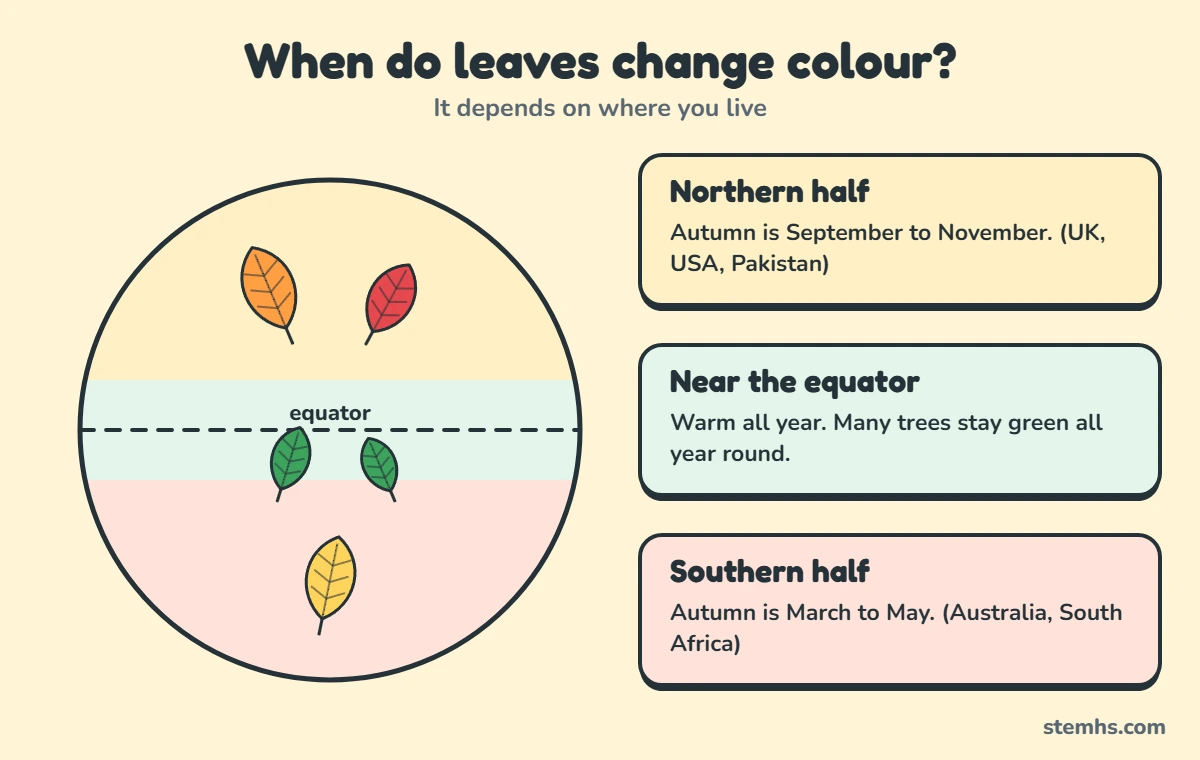
In the UK, the USA and Pakistan, look for colours from September to November. In Pakistan, chinar trees in the north turn bright orange and red. Near the equator it is warm all year, so many trees stay green. Some trees there drop their leaves in the dry season instead.
- A grown-up pours and handles the rubbing alcohol. 👪
- Rubbing alcohol can catch fire. Keep it far away from flames and the stove. 🔥
- Open a window. Do not smell it up close. 🪟
- Never drink it. Wash your hands after. 🧼
- Do not eat leaves or berries you find outside. 🚫
🍁 1. Leaf colour hunt (ages 5+)
- Go outside and find 10 fallen leaves.
- Sort them by colour: green, yellow, orange, red, brown.
- Count each colour. Which colour has the most?
- Find a leaf with 2 colours. Where is the green still showing?
🤔 Guess first: Will you find more yellow leaves or more red leaves?
| Colour | My guess | How many I found |
|---|---|---|
| 🟢 Green | ||
| 🟡 Yellow | ||
| 🟠 Orange | ||
| 🔴 Red | ||
| 🟤 Brown |
🧪 2. Leaf chromatography (ages 8+, with a grown-up)
- Tear the leaves into tiny pieces. Put them in the jar.
- Crush the pieces with the spoon.
- Grown-up: pour in rubbing alcohol, just enough to cover the leaves.
- Wait 30 to 60 minutes, until the alcohol turns green. Stir sometimes.
- Cut a strip of coffee filter, about 2 cm wide.
- Tape the strip to a pencil. Lay the pencil on top of the jar. The bottom of the strip must just touch the liquid.
- Wait 30 to 90 minutes. Watch the colours climb up the paper!
- Take the strip out and let it dry. Count the colour bands.
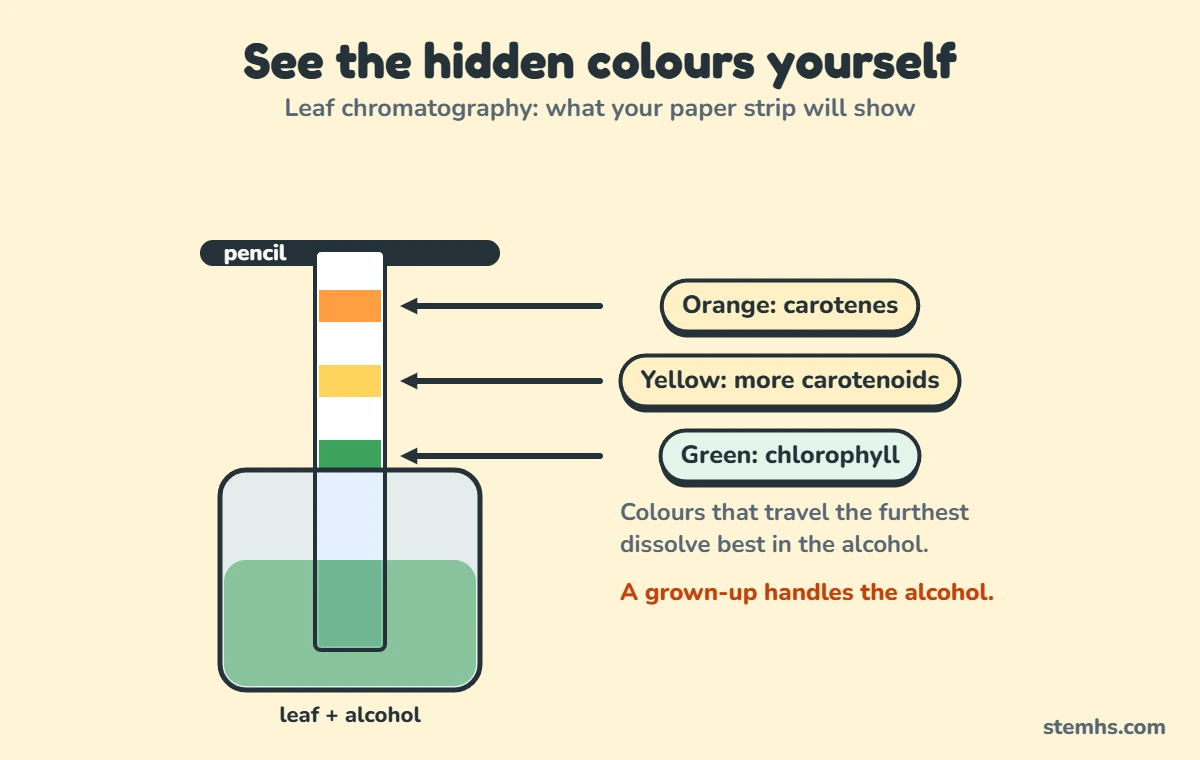
🤔 Guess first: The leaf looks only green. How many colours will you see on the strip?
🚀 Make it a fair test: Try a green leaf and a yellow leaf from the same tree. Use the same amount of alcohol and wait the same time. Which strip has more green?
Great job, leaf scientist!
You found the hidden colours. Now you can explain autumn to your family!
Start with the colour hunt for younger children. Save the chromatography for ages 8 and up, and keep the alcohol in your hands. Ask “What do you think is hiding in this green leaf?” before you start, and “Where did the yellow come from?” at the end.
Curriculum links: England Year 1 seasonal changes and Year 3 plants (the role of leaves). US NGSS 4-LS1-1 (plant structures and their functions). For children learning English, the word cards above build key science vocabulary: chlorophyll, pigment, deciduous and evergreen.
Further reading: Curious Kids: why do leaves change colour? (The Conversation) and Why do leaves change colors? (The Children’s Museum of Indianapolis).
More help: STEM in Simple English for children learning English, and our free parent guide. Try next: 5 Kitchen Science Experiments.
❓ Questions parents ask
Why do leaves change colour in autumn?
Shorter days and cooler weather tell deciduous trees to stop making chlorophyll, the green pigment. As the green breaks down, the yellow and orange carotenoids that were in the leaf all summer become visible. Some trees also make new red pigments.
Why do some leaves turn red?
Red and purple come from anthocyanins. Trees such as many maples make them in autumn from sugar trapped in the leaf. Sunny days and cool (but not freezing) nights usually give the brightest reds.
Why do leaves turn brown?
Brown comes from tannins and from the leaf drying out after it dies. Oak leaves often turn brown and can stay on the tree into winter.
Why do trees lose their leaves?
Soft leaves would freeze and lose water in winter, when there is little sunlight for making food. The tree pulls useful nutrients back, grows a seal called the abscission layer at the base of each leaf stalk, and lets the leaf fall. New leaves grow in spring.
Can we do leaf chromatography without rubbing alcohol?
Water will not move the green pigment far, so alcohol works best. Nail polish remover (acetone) also works, but it is just as flammable. Either way, a grown-up should handle it, away from flames, with a window open.
Did you finish?
Press the button to collect your First Experiment badge.