The 8 planets orbit the Sun on nearly round paths, and they all travel the same way. In this free KS2 lesson, you can watch them move in a 3D solar system model. Learn the order of the planets, find out why farther planets take longer, see your age on Mars, and check what you know with a quiz.
Describe how the Earth and the other planets move round the Sun
- I can describe how the Earth and the other planets move round the Sun.
- I can name the 8 planets in order from the Sun.
- I can explain why planets farther from the Sun take longer to orbit it.
- I can explain how the Earth-centred model gave way to the Sun-centred model.
Curriculum link: KS2 Science, Year 5 Earth and space. See more Earth and space lessons or check what each year group learns.
Explore the solar system orbit model
Press Play and watch the planets travel round the Sun at their real speeds. Change the speed, look from above or from the side, and switch the distances to scale. Then try the planet race, the Earth-centred view and the age calculator under the model.
What is the solar system?
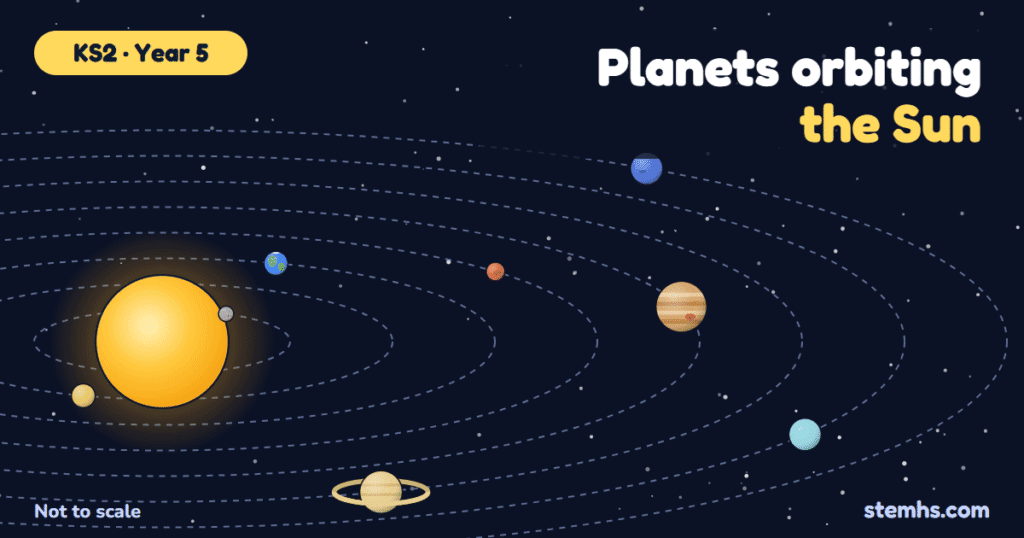
The solar system is the Sun and everything that travels round it. The Sun is a star: a huge ball of very hot gas that gives out light and heat. Eight planets travel round the Sun. There are also dwarf planets, like Pluto, and moons, asteroids and comets.
How do the planets orbit the Sun?
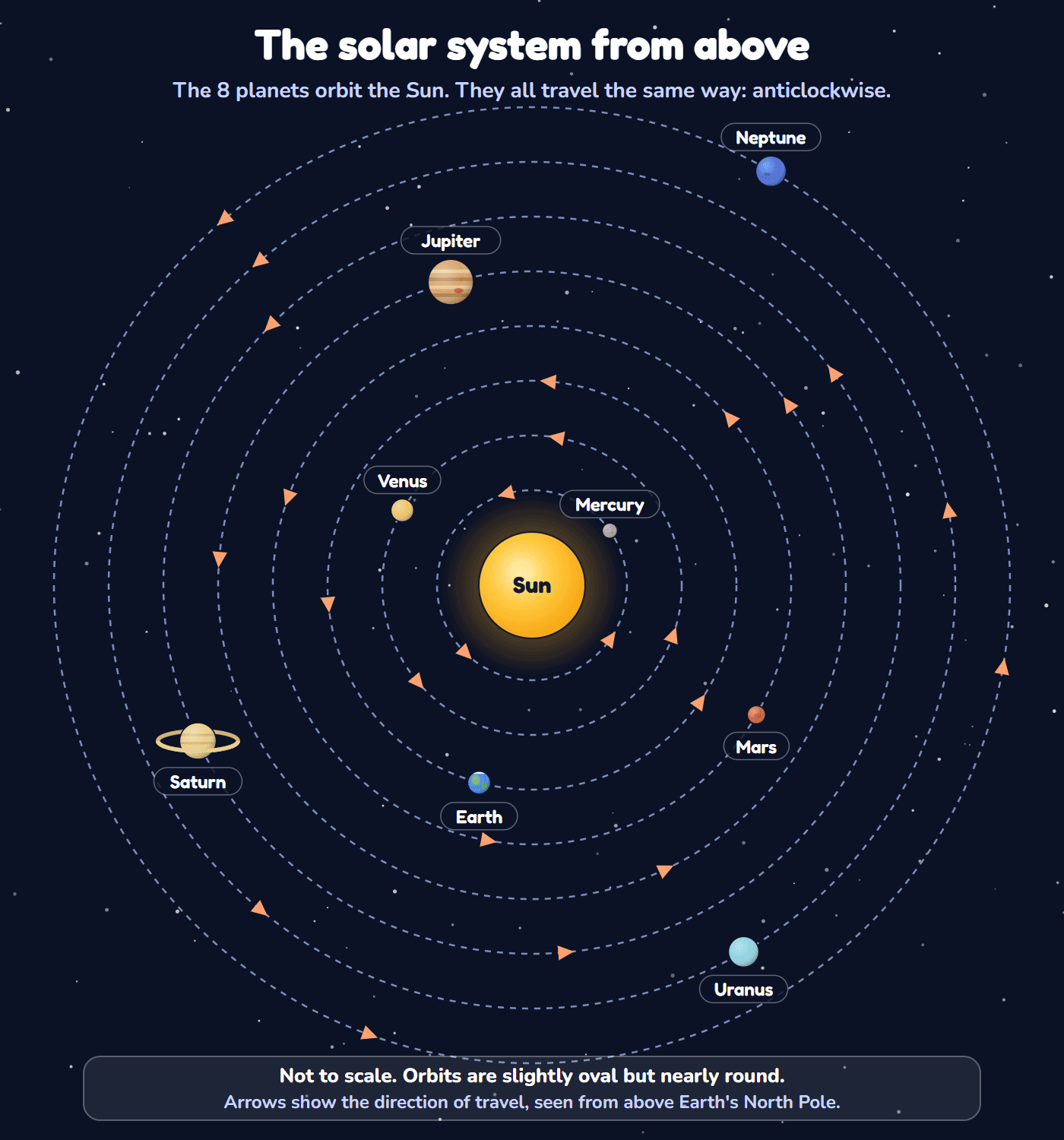
The planets orbit the Sun by travelling round it on paths called orbits. Each orbit is slightly oval but nearly round. All 8 planets go the same way: anticlockwise when you look from above Earth’s North Pole. One orbit is one year on that planet. Earth takes 365¼ days.
The Sun’s gravity pulls on every planet. This pull keeps the planets moving round the Sun instead of flying off into space. While Earth travels round the Sun, it also spins. Earth does both things at the same time.
The planets in order from the Sun
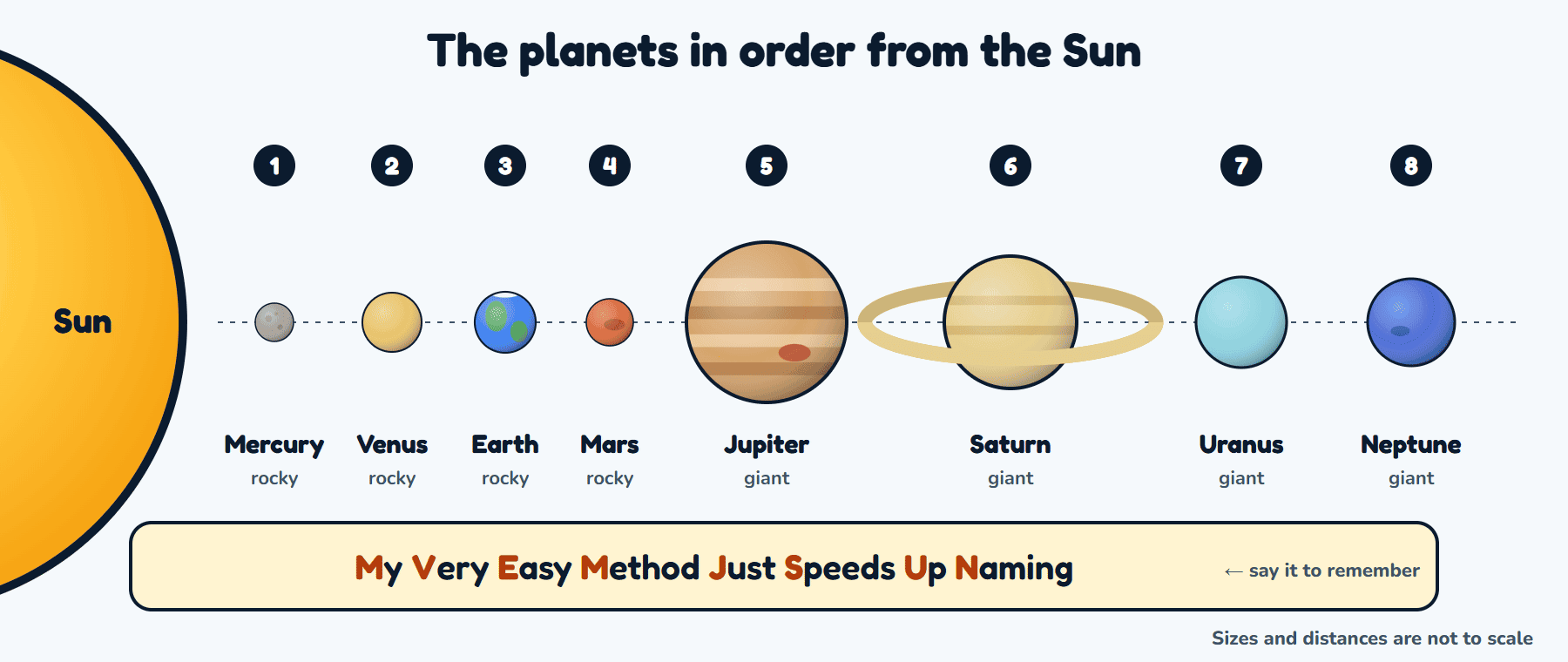
- Mercury: the smallest planet, and the closest to the Sun.
- Venus: the hottest planet. Thick clouds trap the heat.
- Earth: our home, with liquid water and life.
- Mars: the red planet.
- Jupiter: the biggest planet.
- Saturn: it has bright rings of ice and rock.
- Uranus: it spins on its side.
- Neptune: the farthest planet from the Sun.
To remember the order, say: My Very Easy Method Just Speeds Up Naming. The first letter of each word is the first letter of a planet. The first four planets are small and rocky. The last four are giant planets, made mostly of gas and ice.
How long does each planet take to orbit the Sun?
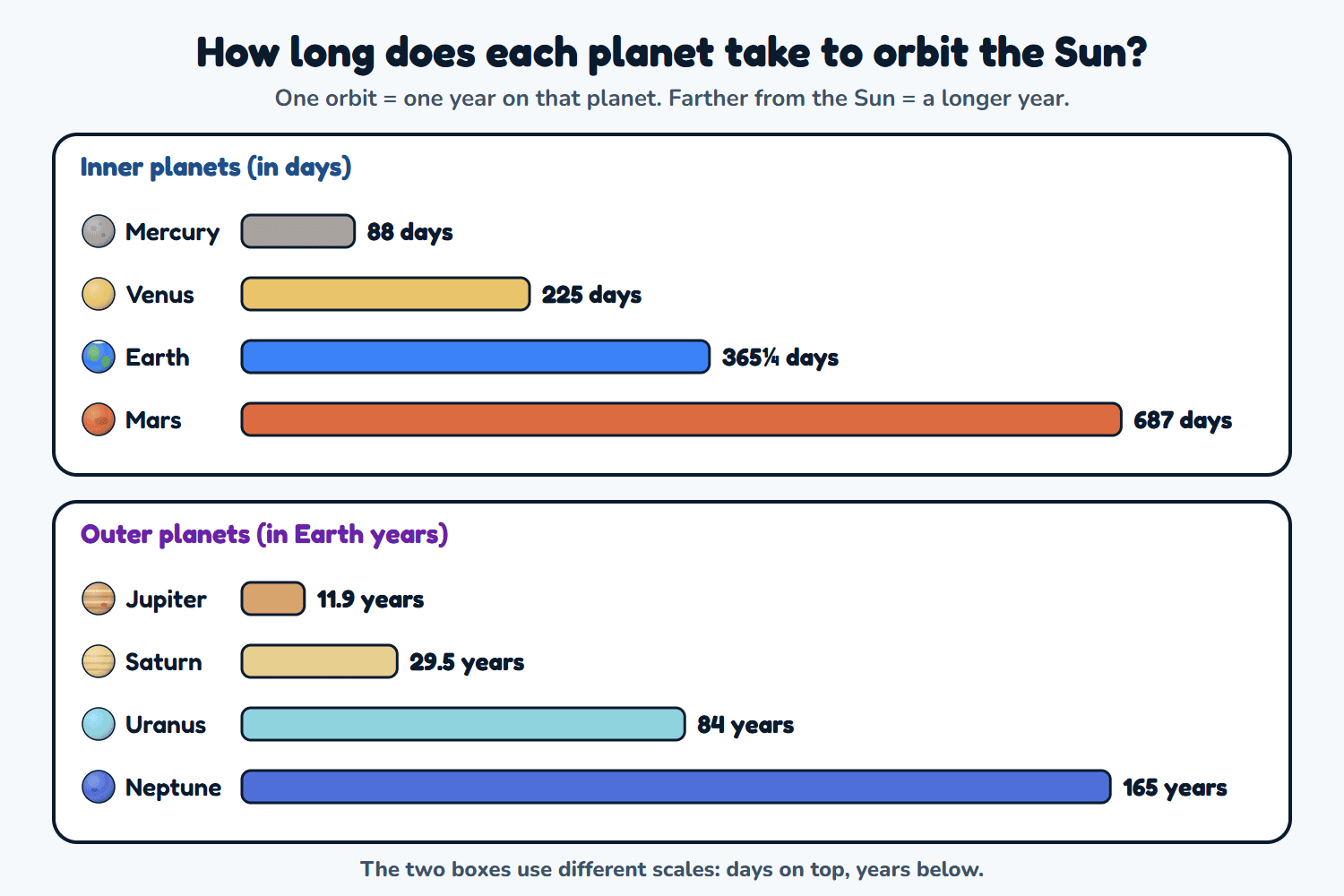
One orbit of the Sun is one year on that planet. The farther a planet is from the Sun, the longer its year.
| Planet | Average distance from the Sun | Time for one orbit (one year) |
|---|---|---|
| Mercury | about 58 million km | 88 days |
| Venus | about 108 million km | 225 days |
| Earth | about 150 million km | 365¼ days (1 year) |
| Mars | about 228 million km | 687 days (about 1.9 years) |
| Jupiter | about 778 million km | about 11.9 years |
| Saturn | about 1,433 million km | about 29.5 years |
| Uranus | about 2,872 million km | about 84 years |
| Neptune | about 4,495 million km | about 165 years |
Why do farther planets take longer? There are two reasons. First, a planet farther away has a longer path to travel. Second, it moves more slowly, because the Sun’s pull is weaker far away. Earth moves at about 30 km every second. Jupiter moves at about 13 km every second.
Why do we have leap years? Earth takes 365¼ days to go round the Sun, but a normal calendar year has 365 days. The extra quarter days add up to one whole day every 4 years. So every fourth year has 366 days, with 29 February.
Watch: why farther planets take longer to orbit
Rotate and orbit: day, night and a year
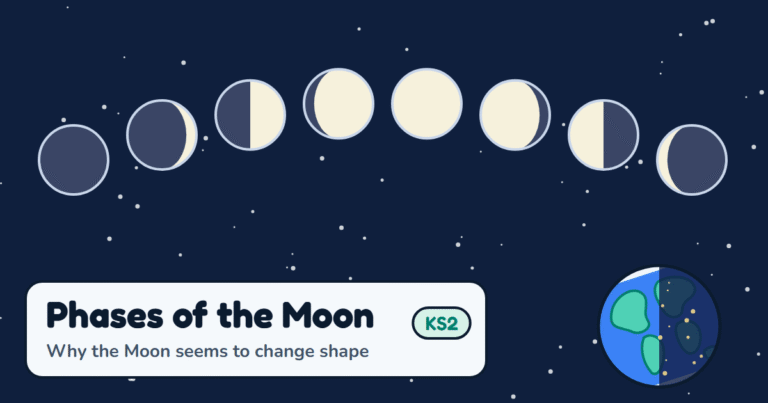
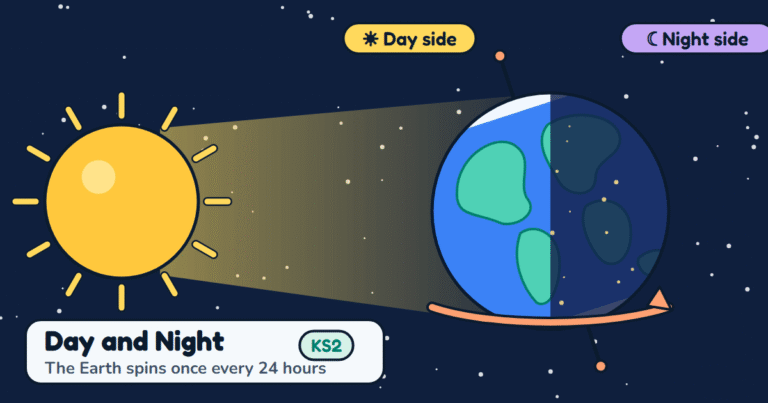
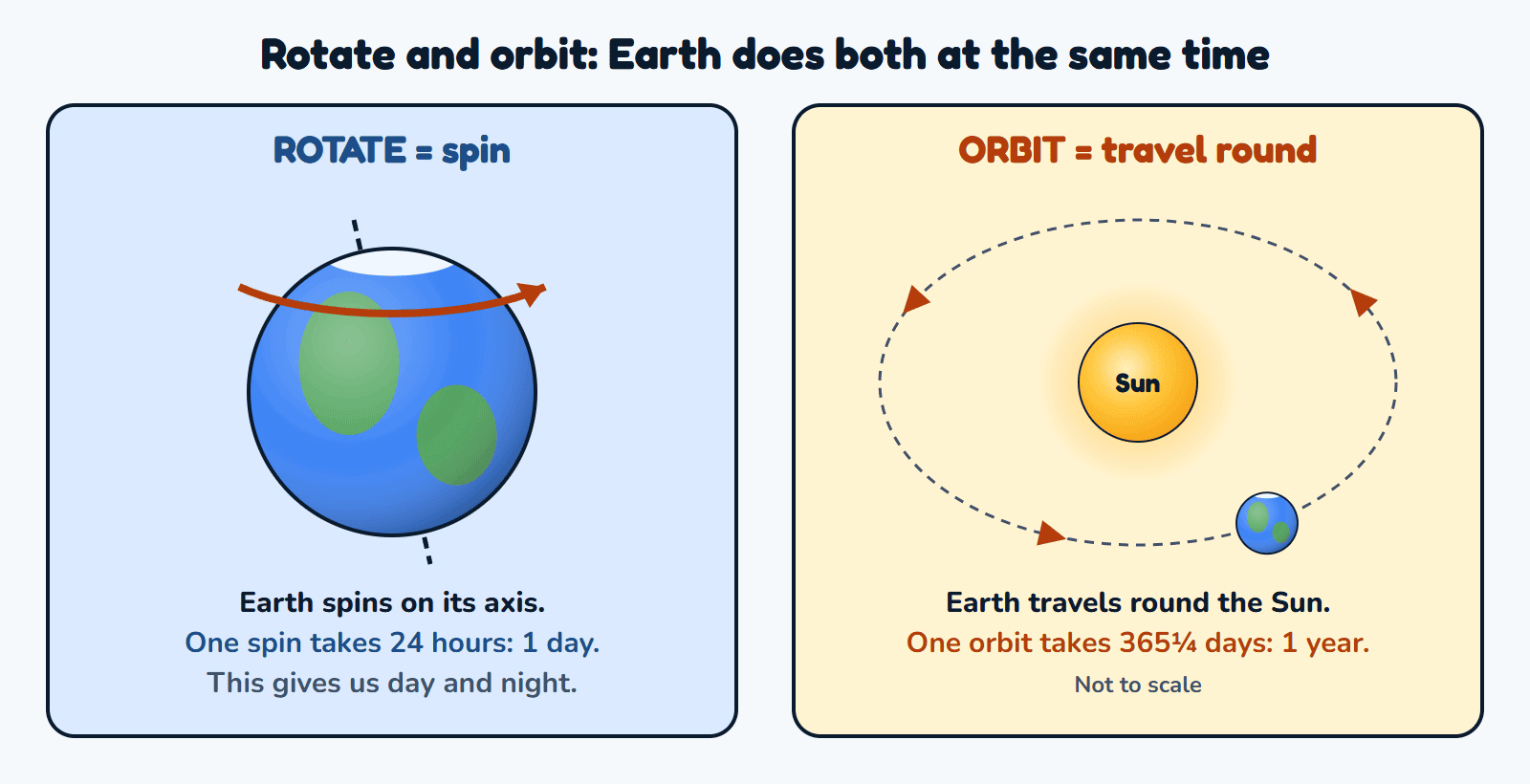
Earth moves in two ways at the same time. It rotates (spins) on its axis once every 24 hours. This gives us day and night. It also orbits (travels round) the Sun once every 365¼ days. This gives us a year. While all this happens, the Moon orbits the Earth, which gives us the phases of the Moon.
Earth-centred or Sun-centred? How our ideas changed
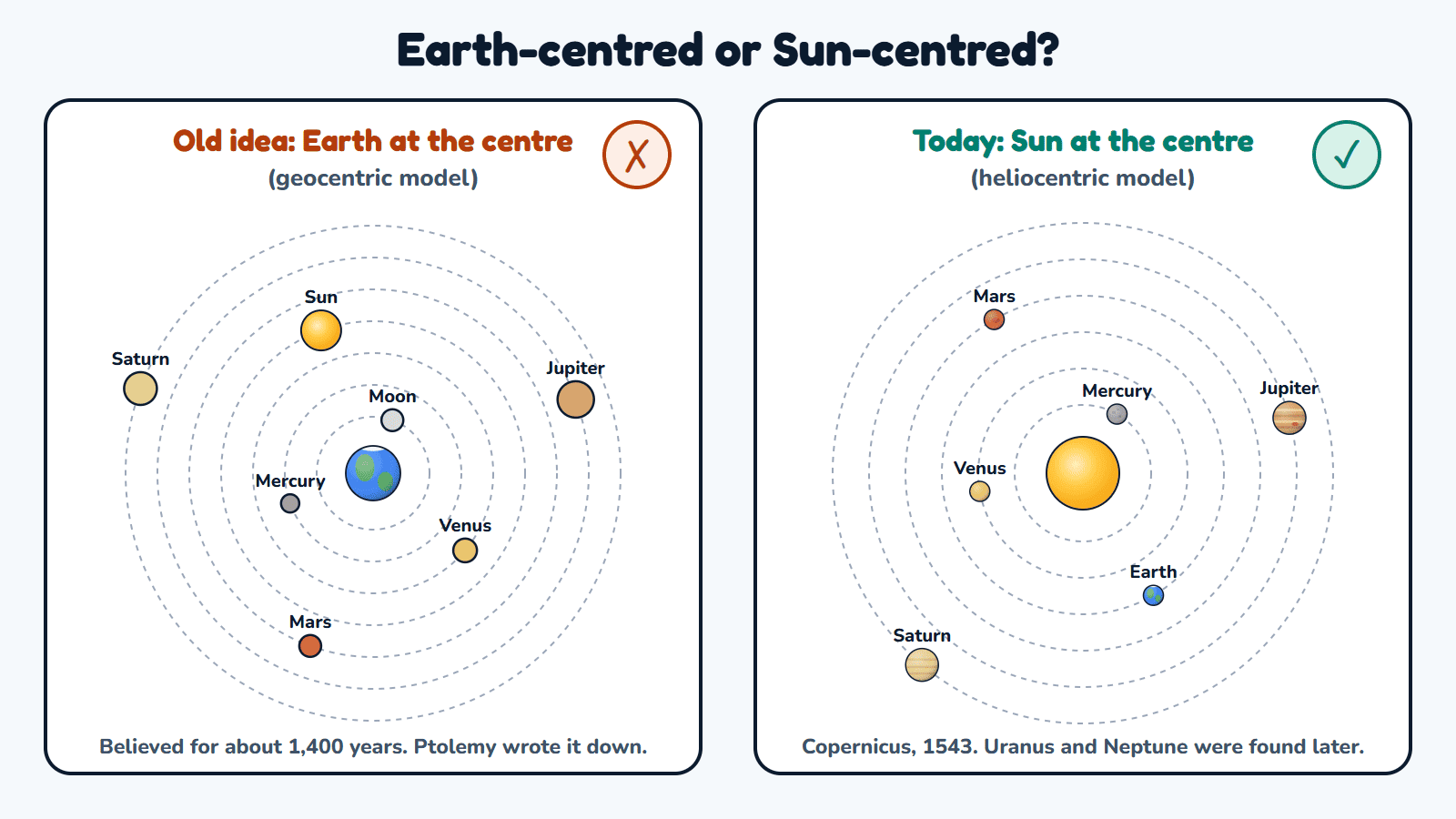
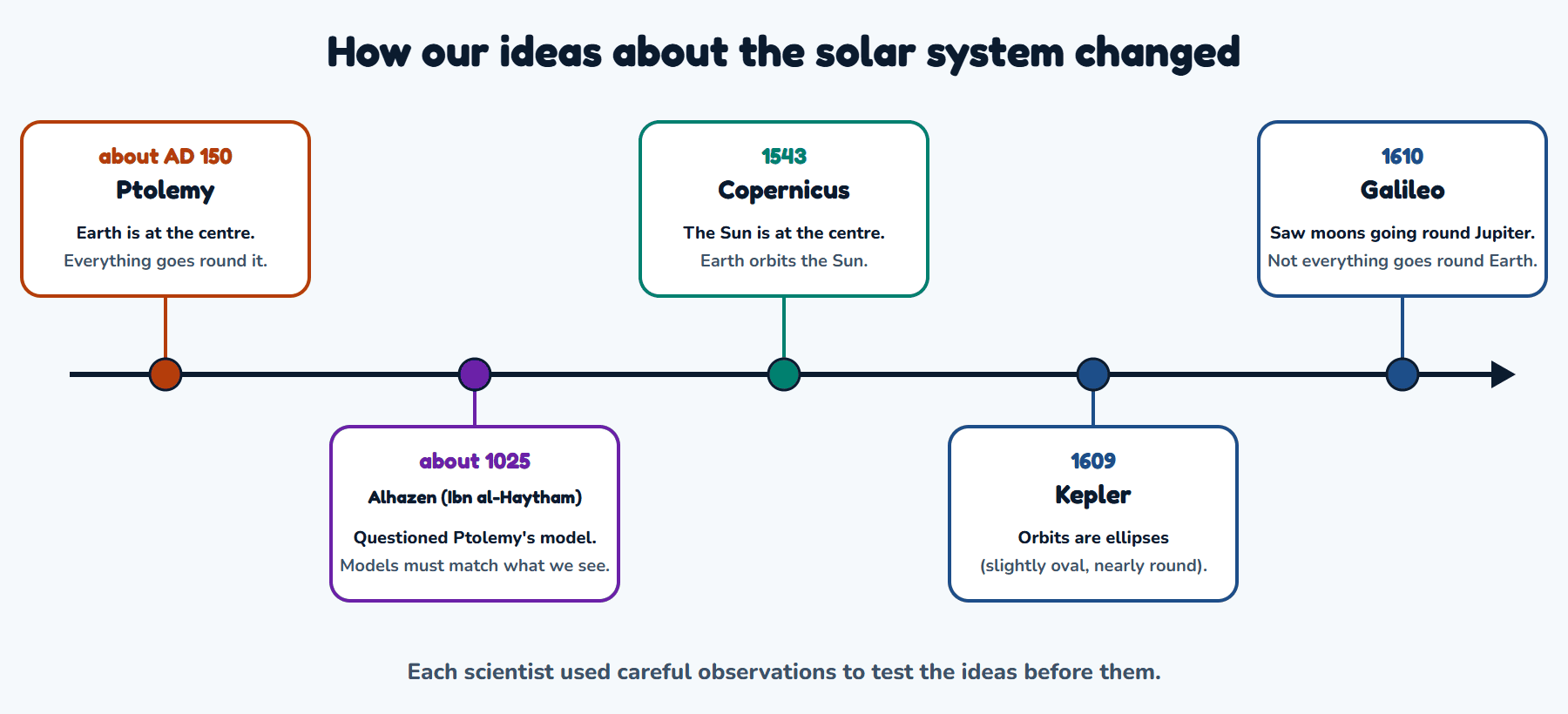
Long ago, most people thought the Earth was at the centre, and the Sun, Moon and planets went round it. This is the geocentric (Earth-centred) model. About AD 150, the Greek scientist Ptolemy wrote it down in detail. People used his model for about 1,400 years.
Around 1025, the scientist Alhazen (Ibn al-Haytham), who worked in Cairo, wrote about problems in Ptolemy’s model. He said a model must match what we really observe. In 1543, Copernicus showed a heliocentric (Sun-centred) model: the Earth and the planets orbit the Sun. In 1609, Kepler showed that orbits are slightly oval. In 1610, Galileo used a telescope and saw moons going round Jupiter. This showed that not everything goes round the Earth.
The Sun seems to move across our sky every day. Does that mean the Sun goes round the Earth?
Show the answer
No. The Earth spins once every 24 hours. As we turn, the Sun seems to move across the sky, from east to west. It is like being on a roundabout: the world around you seems to move, but you are the one turning.
How big and how far? The solar system to scale
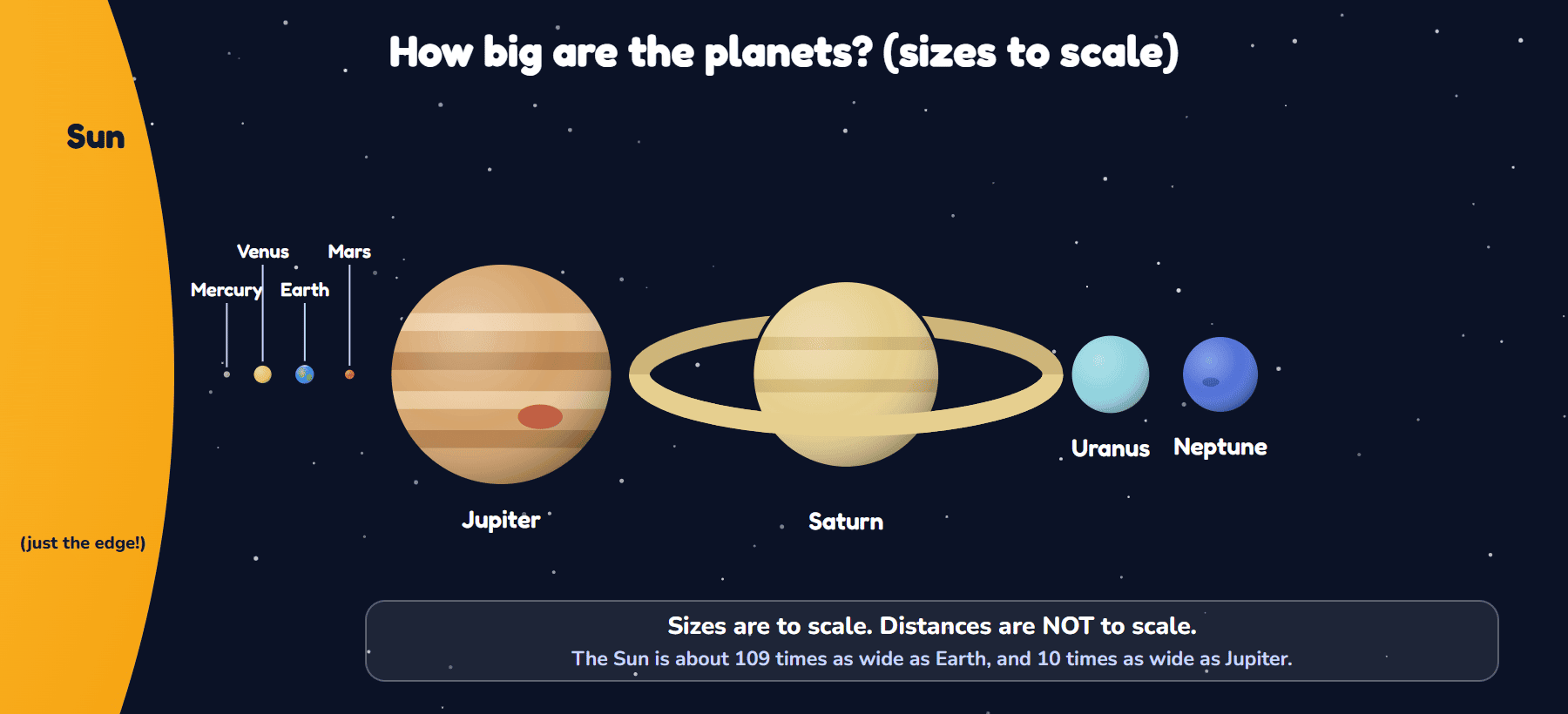
Pictures of the solar system are almost never to scale. The Sun is about 109 times as wide as the Earth. Neptune is about 30 times farther from the Sun than Earth is. If we drew the planets big enough to see, the page would need to be hundreds of metres wide! In the model above, choose To scale to see how the inner planets crowd close to the Sun.
Four common mistakes about the solar system
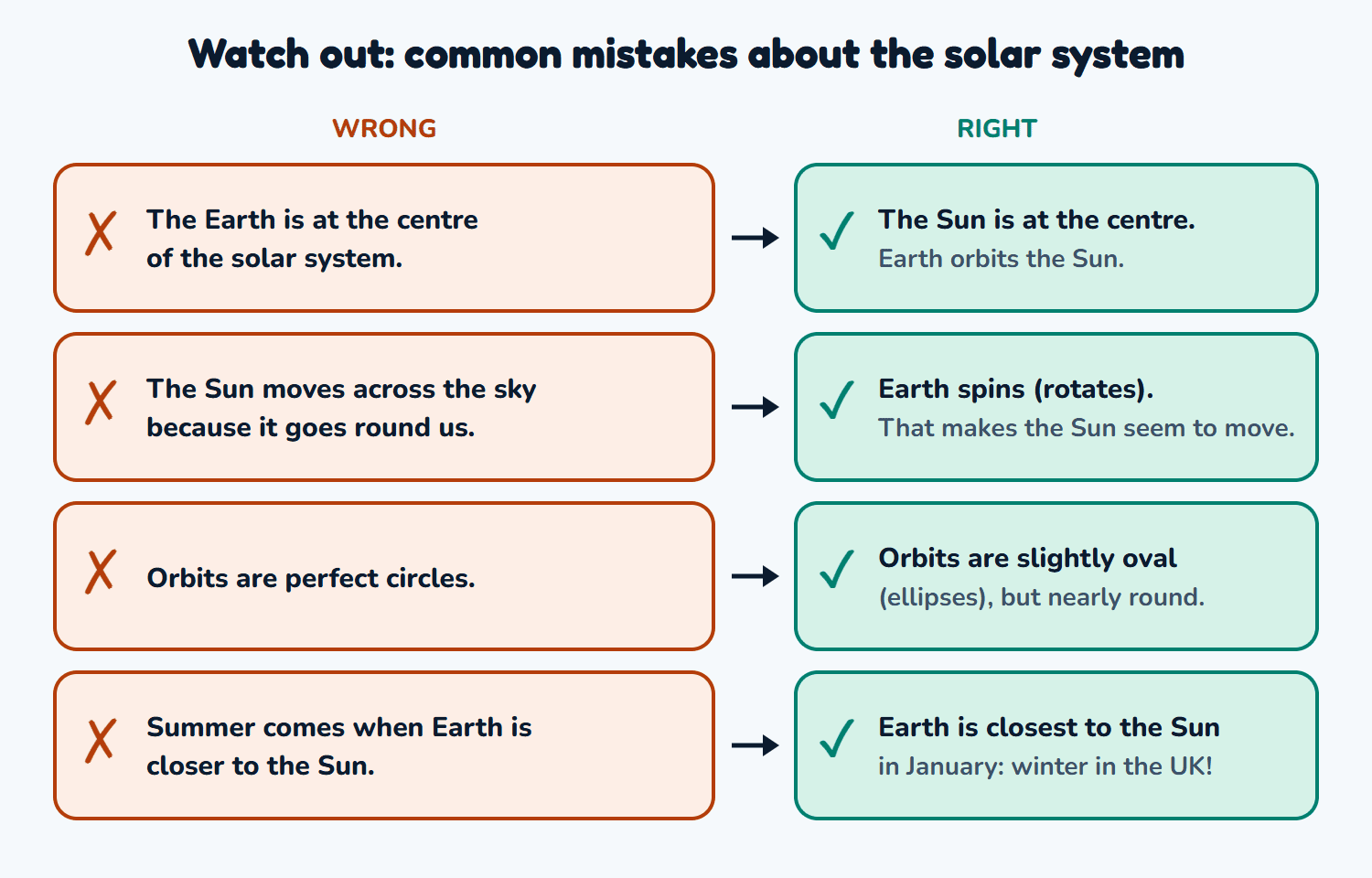
- “The Earth is at the centre.” No. The Sun is at the centre, and the Earth orbits the Sun.
- “The Sun moves across the sky because it goes round us.” No. The Earth spins, so the Sun only seems to move.
- “Orbits are perfect circles.” Not quite. They are slightly oval (ellipses), but nearly round.
- “Summer is when Earth is closest to the Sun.” No. Earth is closest to the Sun in early January, which is winter in the UK. Seasons happen because the Earth is tilted.
Planets orbiting the Sun quiz: 10 questions
Pick an answer. You will see at once if it is right, and why. Read every explanation.
Planets orbiting the Sun quiz
Question 1
What is at the centre of our solar system?
Question 2
What does “orbit” mean?
Question 3
How long does Earth take to orbit the Sun once?
Question 4
Which planet has the shortest year?
Question 5
Why does Neptune take much longer to orbit the Sun than Earth?
Question 6
Which list shows the first four planets in order from the Sun?
Question 7
Seen from above Earth’s North Pole, which way do the planets travel round the Sun?
Question 8
Earth spins once on its axis. What does this give us?
Question 9
Who showed a model with the Sun at the centre, in 1543?
Question 10
What shape are the planets’ orbits?
Free solar system printables
All six are free PDF downloads for home and class. No email needed. Find more in our free printables library.
Planets orbiting the Sun worksheet
Label the solar system, draw the direction of orbit, rotate or orbit, orbit-time questions, true or false and an explain question, with a full answer page.
Download the free PDFPlanet fact cards
8 cards with each planet’s order, distance from the Sun, year length, size and a fact.
Download the free PDFPlayground solar system scale model
Pace out the distances of the planets from the Sun, with a step table for small and big spaces, questions and cards to hold.
Download the free PDFEarth-centred to Sun-centred timeline
Cut and stick the ideas of Ptolemy, Alhazen, Copernicus, Kepler and Galileo in the right order, with answers.
Download the free PDFYour age on other planets
Work out your age on every planet from its year length, with a worked example and answers for a 10-year-old.
Download the free PDFSolar system poster
A wall poster with the 8 planets in order, their distance from the Sun and the length of their year.
Download A4 Download A3Key words for the solar system
Flashcards: solar system words
Read the word. Say what it means. Then tap the card to check.
- solar system
- The Sun and everything that travels round it.
- star
- A huge ball of very hot gas that gives out light. The Sun is a star.
- planet
- A large, round object that orbits the Sun.
- dwarf planet
- A small, round object that orbits the Sun, like Pluto.
- orbit
- The path an object takes round another object. Also: to travel round it.
- rotate
- To spin round on an axis. Earth rotates once every 24 hours.
- axis
- An imaginary line through the middle of a planet. The planet spins round it.
- year
- The time a planet takes to orbit the Sun once. Earth: 365¼ days.
- geocentric
- An old model with the Earth at the centre.
- heliocentric
- The model with the Sun at the centre. This is correct.
Match the words to their meanings
Solar system: match the word to its meaning
Drag each meaning to the right word. Or tap a meaning, then tap a word. Press “Check my answers” when you finish.
Word
- orbit
- rotate
- star
- planet
- year
- geocentric
- heliocentric
- solar system
Meaning (drag or tap)
- ✅ The Sun is at the centre of the solar system, and 8 planets orbit it.
- ✅ All the planets travel the same way round the Sun, on nearly round paths.
- ✅ Farther planets have a longer path and move more slowly, so their year is longer.
- ✅ Earth rotates once a day and orbits the Sun once a year (365¼ days).
- ✅ Scientists changed from an Earth-centred model to a Sun-centred model.
Curriculum: in the National Curriculum for England, Year 5 pupils “describe the movement of the Earth, and other planets, relative to the Sun in the solar system”. The non-statutory notes suggest finding out how the geocentric model gave way to the heliocentric model, using scientists such as Ptolemy, Alhazen and Copernicus. Planet facts and sizes are background knowledge.
How to use it: put the orbit model on a big screen. Ask pupils to predict which planet will finish an orbit first, then press Play. Use the planet race to explain why farther planets take longer. The playground scale model works well as an outdoor lesson.
For children learning English: teach orbit, rotate, axis, star and planet with the flashcards first (more tips in STEM for children learning English). Useful sentence starters: “The Earth orbits…”, “It takes longer because…”.
Related: day and night (Earth’s spin) and phases of the Moon (the Moon’s orbit) complete the Year 5 Earth and space topic. New to teaching science at home? Read the guide for parents.
❓ Planets orbiting the Sun: questions people ask
Why do the planets orbit the Sun?
The Sun’s gravity pulls on every planet. The planets are also moving very fast. The pull of gravity bends their path into a curve, so they keep going round the Sun instead of flying off into space.
Which planet takes the longest to orbit the Sun?
Neptune, the farthest planet. One orbit takes about 165 Earth years. Mercury, the closest planet, takes only 88 days.
Do all the planets orbit the Sun in the same direction?
Yes. Seen from above Earth’s North Pole, all 8 planets travel anticlockwise round the Sun.
Is Pluto a planet?
No. Since 2006, scientists call Pluto a dwarf planet. It is smaller than our Moon and shares its part of space with many other icy objects.
Why do we have a leap year?
Earth takes 365¼ days to orbit the Sun. A normal year has 365 days, so the extra quarter days add up to one day every 4 years. That day is 29 February.
How long does it take the Earth to orbit the Sun?
365¼ days, which is one year. At the same time, the Earth spins once every 24 hours, which gives us day and night.
Did you finish?
Press the button to collect your First Experiment badge.